
Odessa Previous Residents Sources
The best source depends on the era and the question. A deed records parties to a conveyance, not a universal occupancy list. A directory gives an address snapshot on its publication date. A map can show the block or building context without naming a household. For Odessa previous residents research, begin with the newest parcel and legal-description evidence, then use the date of each earlier record to select the next source.
| Source | Years It Covers | Where Held | What It Shows |
|---|---|---|---|
| Land index | January 10, 1887–June 30, 2026, vendor display | Ector County Clerk's county-linked TexasFile index | Recorded parties, dates, instrument details, and legal descriptions. |
| Ector CAD and map | Current rolling data; online start not located | Ector County Appraisal District | Account, situs, mailing address, value history, parcel, and map context. |
| Telephone and city directories | 1930–2005 cataloged telephone run; selected city-directory years | UT Austin Briscoe catalog | Dated address listings and publication metadata. |
| TSLAC microfilm | Marriages 1891–1951; deaths 1903–1970 | TSLAC, with UTPB listed locally | Indexed historical county record leads and reel ranges. |
| Sanborn maps | Odessa editions identified for 1927 and 1950 | Library of Congress route and local source list | Block and building context for a dated address. |
| City archive | Date-range search; earliest online date not located | City of Odessa archive | Public notices, minutes, projects, and city-document context. |
For a record that is not online, use the custodian named in the table. The Ector County Clerk is at 300 N Grant Ave., Room 111, Odessa, and lists land, marriage, birth and death, probate, minutes, and related county records. The office links the official county starting route for land records and can clarify copy access.
Odessa Courthouse Record Eras
Ector County was created from Tom Green County in 1887 and organized in 1891. Odessa then moved through four courthouse eras as the county grew from a railroad settlement into an oil-region center. That history matters when a record cites only a county records room or an older courthouse. Date, office series, and volume are stronger guides than a modern street address.
A current account number is a convenient way to start the previous residents trail. It does not replace older deed volumes, plats, or address conventions. The 1973 Ector County inventory can identify the County Clerk, District Clerk, Treasurer, Tax Assessor-Collector, Surveyor, and Sheriff series that existed in county custody. Treat it as a finding aid, not as a complete searchable index.
Odessa Land Index Coverage
The official county-linked Tyler land-record portal describes its index as a research starting point and advises spelling variations. During the research inspection, its live form returned an automated access response, so its current field labels and image path should be checked directly before relying on them. The County Clerk remains the official custodian route for a question about an instrument or copy.
The county-linked TexasFile Ector County index supplies a documented search grammar and displayed coverage. It offers name, instrument-number, book and page, legal-description, reference, and date searches. Its result rows can show county, date, type, grantor, grantee, BVP or number, legal description, and detailed-view controls. Free search and preview access did not mean that every high-quality PDF was free, and the vendor's coverage display should be confirmed with the Clerk.
Note: An index line is a lead to a recorded instrument, so inspect the actual document before drawing a title or family conclusion.
Trace Odessa Previous Residents
A deed chain is the most dependable way to move through property parties, but it is not a direct record of who lived at the address. Start from the parcel's present identifier, not an assumed name. Ector CAD separates the situs from the owner's mailing address, and either can differ from a historic directory address. Carry the legal description with the street address when moving into an older index.
- Search Ector CAD by current location or address and save the account number, situs, owner mailing address, and legal description as separate fields.
- Locate the newest recorded conveyance through the County Clerk route or the documented TexasFile index. Record the instrument number, recording date, parties, and legal description.
- Read the seller in that instrument as the grantor. Search that party as a grantee to locate the earlier acquisition, using name variants, an approximate date, or legal-description fields when needed.
- Repeat one dated conveyance at a time. Preserve each result line before opening or requesting an image, because a search session or detail link may not be permanent.
- When the online trail ends or conflicts, ask the County Clerk for the specific book, volume, page, or instrument rather than requesting every record tied to a name.
- Grantor
- The party transferring an interest in a recorded instrument.
- Grantee
- The party receiving the stated interest in that instrument.
- Chain of title
- A dated sequence of recorded transfers affecting an interest in the same parcel or legal description.
- Legal description
- The subdivision, lot, block, survey, tract, or other formal parcel description. It can bridge records when the street address changes.
The TexasFile result inventory includes the county, date, document type, grantor, grantee, BVP or number, legal description, and detailed-view path. Save those details with each Odessa previous residents search. An index entry is not the deed itself: signatures, exceptions, consideration, capacity, and the recording stamp require inspection of the actual instrument or a clerk-provided copy.
Odessa Directory Census Pairing
Directories help turn a property-party trail into a dated household question. The UT Austin Odessa directory catalog lists Lloyd's Odessa City Directory for 1955, 1966, and 1967, Johnson issues for 1981 and 1982, a 1986 Cole directory, and a long Southwestern Bell telephone run from 1930 through 2005 with listed gaps. The catalog is a discovery tool and citation source, not proof that a scanned page is available for each issue.
UT's Texas Directories index lets researchers browse by city, state, directory type, and optional year range.
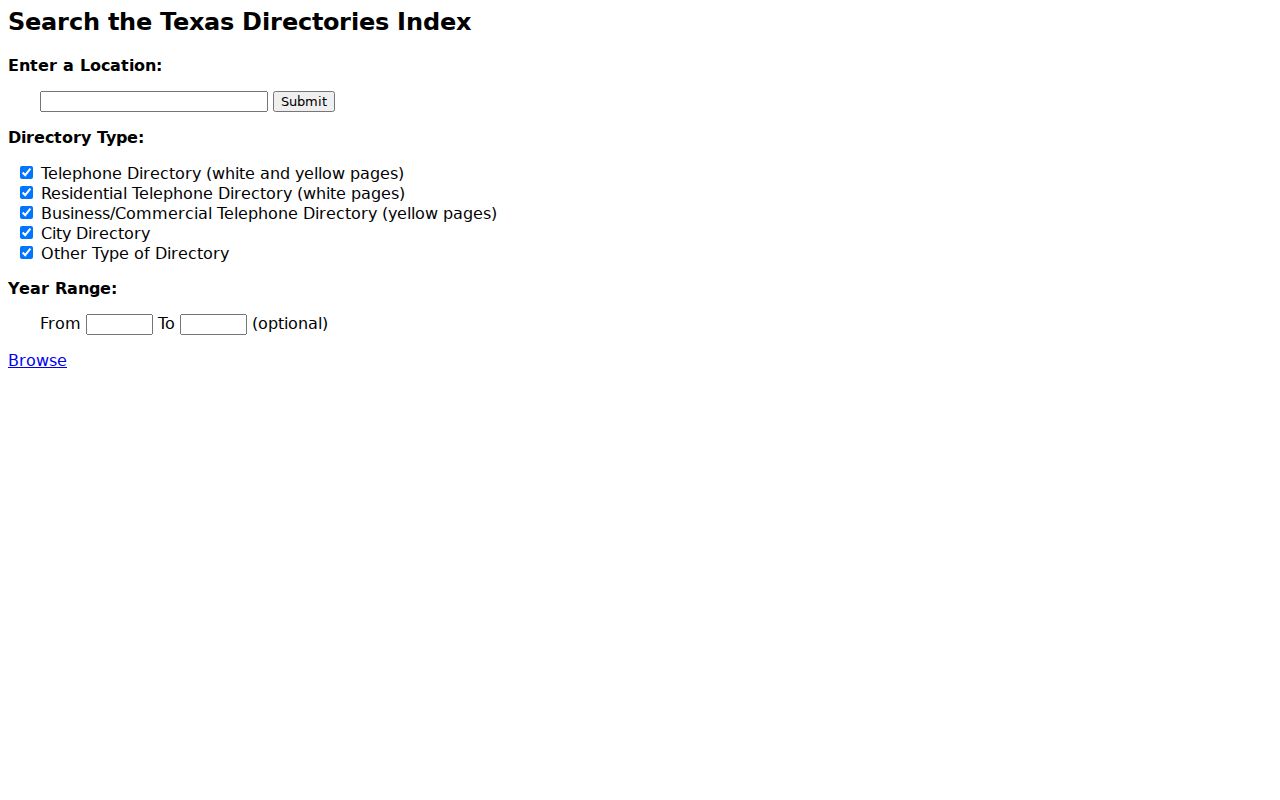
The catalog controls support a narrow Odessa search by date and directory type before a researcher asks a library or repository for a particular issue or page.
- Use the recording date from a deed or plat to choose the nearest Odessa directory issue.
- Capture the publication title, publisher, issue date, page, address spelling, and any abbreviations exactly as printed.
- Pair that address snapshot with the closest available federal census material, using the Ector County Library's genealogy resources for access help.
- Compare the name and address against a separate property, obituary, or city record before treating it as a household match.
The Odessa directory book covers the historical collections themselves. For previous residents work, the point is to place one address in the correct dated source.
Odessa Sanborn Map Checks
Sanborn material can test whether the block, building footprint, or nearby intersecting streets fit the address in an older record. An official Texas list identifies Odessa, Ector County, editions for 1927 and 1950. The Library of Congress Sanborn guide supports searches by state, city, edition date, sheet number, place names, notes, and digitized files. A sheet supplies built-environment context, not a current parcel determination or a name list.
The Library of Congress Sanborn search guidance shows the fields used to locate map editions and sheets.
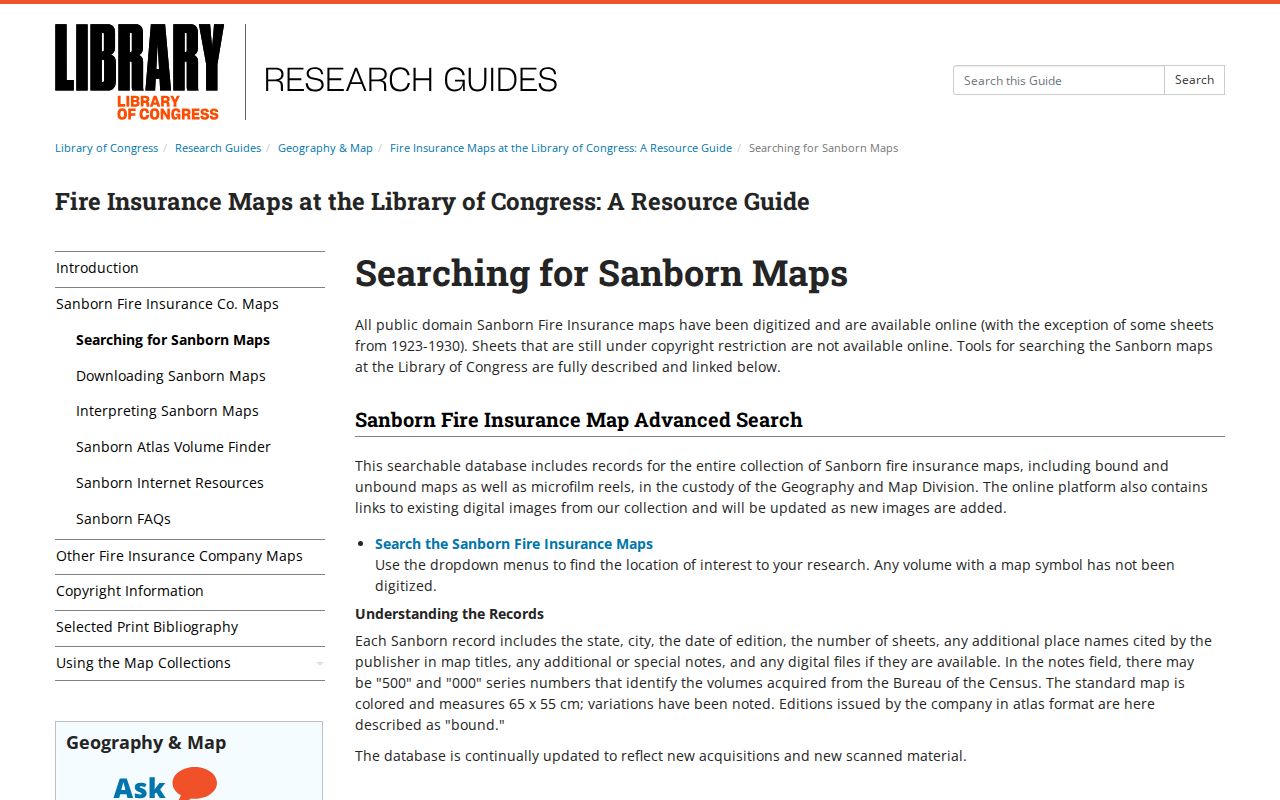
Use an Odessa Sanborn result beside a dated directory or deed, recording the edition and sheet. A subdivision plat, dedication, replat, or street change may alter the legal description without creating a new physical location.
Odessa Microfilm Gaps
The TSLAC Ector County holdings provide a physical-access route when the online record trail stops. The listing puts the death index for 1903 through 1971 on reel 2031858 and death record volumes across reels 2031859 through 2031861. It lists marriage records from 1891 through 1951 and a male and female index reaching 1891 through 1994. UTPB in Odessa is named as a local microfilm location.
The listing exposes missing or unlisted volume 4 and volume 7 gaps. That archival quirk is meaningful: note a gap in a prior-resident timeline instead of inventing an event that a missing volume might have contained. Ask for the reel, volume, and date range, then preserve the response with the rest of the address research.
Note: A no-result directory or reel check records what was searched, not proof that an Odessa address or person was absent.
Odessa County Record Inventory
The digitized 1973 inventory gives a practical way to name an older record series before contacting a custodian. It describes historical County Clerk, District Clerk, Treasurer, Tax Assessor-Collector, Surveyor, and Sheriff materials. That makes it useful for locating a type of volume, but it does not replace a deed index or establish that every listed record is online today.
UNT's digitized Ector County record inventory presents the finding aid used to identify those older county series.
Use the inventory's office and series descriptions to make a precise Odessa request, then check the current custodian for access, copy options, and any redactions.
The City of Odessa archive provides a separate city-side context search with keyword, category, time-period, and date-range controls. Minutes, public notices, and completed-project records can explain why a site changed, but they do not establish an occupant identity.
Odessa Past Household Limits
Previous residents evidence needs labels, not assumptions. A recorded deed may identify an owner or other party. An Ector CAD card can show a tax-account owner and a mailing address, while the situs identifies the appraised location. A directory may show a printed address on one date. None of those facts alone proves that a person lived there throughout a period, and the owner's mailing address should not be merged with the house address.
Keep names of living people to the minimum needed for a lawful family-history, heir, or house-history question. Texas confidentiality rules can restrict records, and a missing result can reflect a protected field, an indexing limit, or an unsearched repository. The safest conclusion is limited to what the dated record actually says.